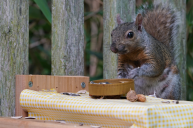
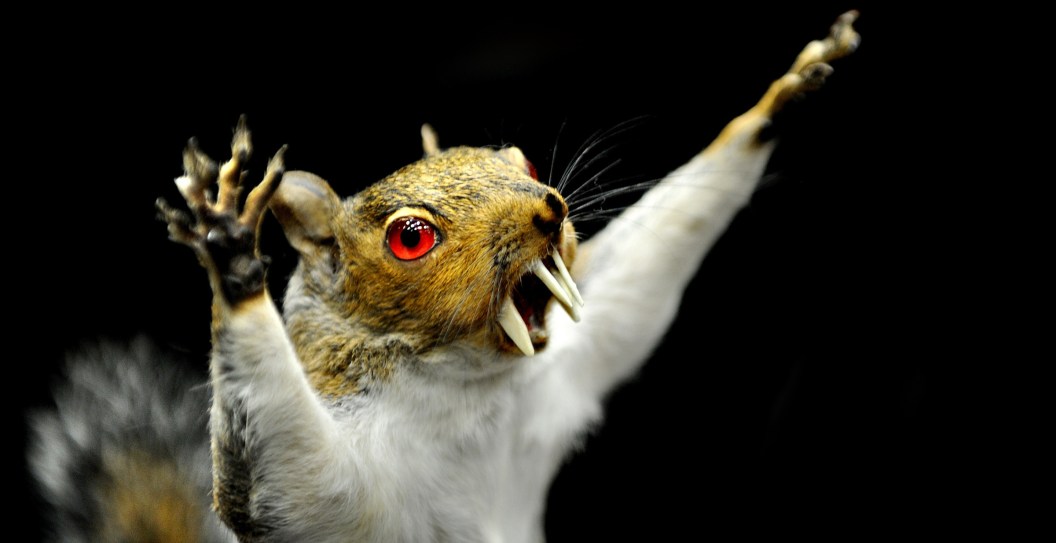
Zombies are a thing of legend... right? Well, social media says otherwise. Except they're not trying to eat your brains—they're more partial to nuts and acorns.
Well, that's what these strange-looking squirrels have been dubbed as, anyway. As reported by the New York Post, zombie-like squirrels have been spotted roaming around backyards nationwide.
And calling them "zombies" is a pretty apt term. Pictures shared online from states including Florida, North Carolina, and Michigan show a pretty scary sight.
Squirrels are seen having several holes in their fur, alongside tumors on their bodies that appear to be oozing.
People on social media have gone crazy trying to figure out the exact cause. "What is going on with the squirrels lately?!" one commenter wrote. "This is the third one I've seen looking like this, and it's honestly freaking me out."
Another posted a picture of the crazy sight, captioning it, "Found this poor squirrel in my back yard, really scared the crap out of me because I could tell it looked deformed."
Videos by Wide Open Country
What's the Cause of the Zombie Squirrels?
Of course, your first thought would be about diseases. And you'd be right.
But while it's because of a disease, like some zombie horror show, it's a lot less scary than what you'd expect. And you won't believe what disease... It's squirrel herpes. Or at least, the squirrel equivalent!
Wildlife experts have explained that the zombie squirrels are likely affected by squirrel fibromatosis. It's a skin disease that's caused by the leporipoxvirus.
The virus is herpes-like in terms of its transmission—it spreads through both direct contact between healthy and infected squirrels and their saliva.
But when a previous outbreak of zombie squirrels happened in August 2025, wildlife experts were keen to explain that you really shouldn't be concerned.
A spokesperson for Maine's Department of Inland Fisheries and Wildlife explained that they don't pose a threat to people, pets, or birds.
She explained to Bangor Daily News that "it's like when you get a large concentration of people. If someone is sick and it's something that spreads easily, others are going to catch it."