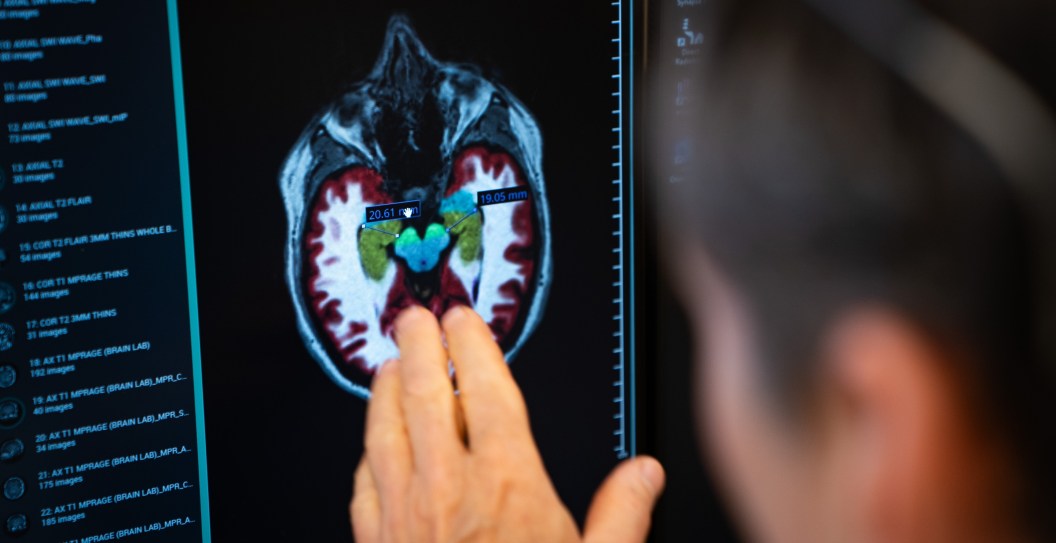
A 20-year-old woman is opening up about a rare brain condition that once left her unable to walk or talk, which she's been living with for a decade.
Videos by Wide Open Country
The UK woman, identified only as Casey, recalled how, as a 10-year-old schoolgirl in Kent, England, in the fall of November 2016, she fell gravely ill. After her mom took her to a nearby hospital, Casey was diagnosed with viral meningitis. She was sent home with antibiotics and began to feel better.
However, by that winter, things took a grave turn.
"Everything was fine for a little while — until February the next year, when I started experiencing graphic hallucinations. It was like I was out of my own body," the now 20-year-old told PEOPLE.
By her 11th birthday, Casey had come down with a severe list of symptoms, including developing psychosis and losing her ability to walk, talk, and eat. Episodes of seizures eventually led to her being sent to a specialist hospital.
Finally, she was diagnosed with anti-NMDAR encephalitis. It's a type of brain inflammation brought on when the victim's immune system mistakenly attacks the brain's receptors. Casey suffered from many of the symptoms of the rare brain condition, which also include memory problems and emotional or behavioral changes.
While receiving a cocktail of medications to battle against the brain condition, the young woman missed a lot of school. This meant the rite of passage from middle school to high school had to be postponed.
"It was awful," she admitted to PEOPLE. "I didn't get to go to any of the transition events. I had no one and no friends when I went back, and I was still recovering. It was really isolating — very lonely."
Casey's Brain Condition Returned in 2020 and 2023, Leading Her to Fear Yet Another Relapse
Then, in 2020, she was hit with another bout of encephalitis.
"That time was actually much worse," she recalled. "We were in the middle of a COVID lockdown, and I started having my hallucinations again. I went to my teacher and told her there was something wrong, and that was the last day I remember going to school."
Stuck in the hospital once again, she recalls this round being much worse due to COVID restrictions in place at the time.
"I was older, and I remembered a lot more of actually being ill, so the recovery felt much worse," Casey told PEOPLE. "I didn't bounce back as well as I did the first time."
With another relapse as recently as 2023, the young woman lives in constant fear of the brain condition returning.
"I constantly feel on edge now," she admitted. "I live my life as though I'm going to get ill again."
Growing up, Casey dreamed of becoming a doctor. Now, due to her time spent recovering in hospital environments, she has PTSD from them. She shifted to studying marine biology and oceanography at college.
"I live every day in fear of ending up back in the hospital and having to restart my life again," she said.
Casey also added that just because she seems healthy now, the traumatic experiences of her hospital stays and symptoms haunt her.
"It has such a big impact on mental health and the way people have to live their lives," she stressed.
"Sometimes I mourn who I would have been if I'd never become ill."