
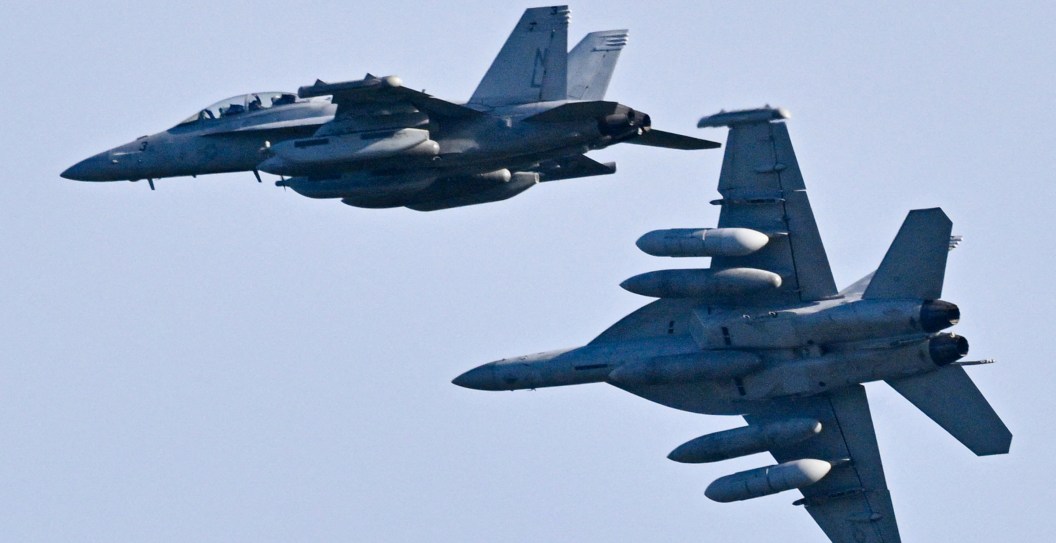
Spectators were horrified to see two U.S. Navy jets crash into each other during an air show. As reported by the Associated Press, the incident happened at around 10:00 pm local time on Sunday, May 17.
Two U.S. Navy EA18-G Growlers crashed into each other during an aerial maneuver at the Mountain Home Air Force Base in western Idaho. The jets were from the Electronic Attack Squadron 129 in Whidbey Island, Washington.
Videos from the incident posted on social media by spectators show the shocking collision. The two jets appear to descend and ascend near each other, causing them to touch. The pilots were forced to eject—the videos show their parachutes deploying as the jets tumble toward the ground.
In a statement, Commander Amelia Umayam, spokesperson for the Naval Air Forces, U.S. Pacific Fleet, confirmed the situation. Luckily, no one was injured, and all four service members in the jets were able to eject safely. However, as a precaution, they were being evaluated by doctors.
As well as this, no one at the military base, including spectators, was injured. Kim Sykes, the marketing director of the Silver Wings of Idaho, said that "Everyone is safe, and I think that's the most important thing."
The cause of the crash is still unknown and is currently being investigated.
Videos by Wide Open Country
The Jet Accident Is Unprecedented in Terms of Air Show Safety
This incident is particularly concerning as it was the first Gunfighter Skies event at the base since 2018. This is because a hang glider had died in a crash during a performance that year.
So, the fact that this has happened in the first show in 8 years has raised questions for Navy officials.
And, according to John Cudahy, who is the president and CEO of the International Council of Air Shows, this is pretty unprecedented stuff. That's because air shows have been working tirelessly for the past decade to make sure this stuff doesn't happen as often.
There used to be an average of two deaths a year at the turn of the millennium. But the average is falling drastically—as of this decade, it's only around 1 death a year.
Cudahy explained, "Safety-wise, we've really enjoyed an unprecedented term of few accidents."
If nothing else, we're just glad everyone's okay. Things could have gone so much worse.