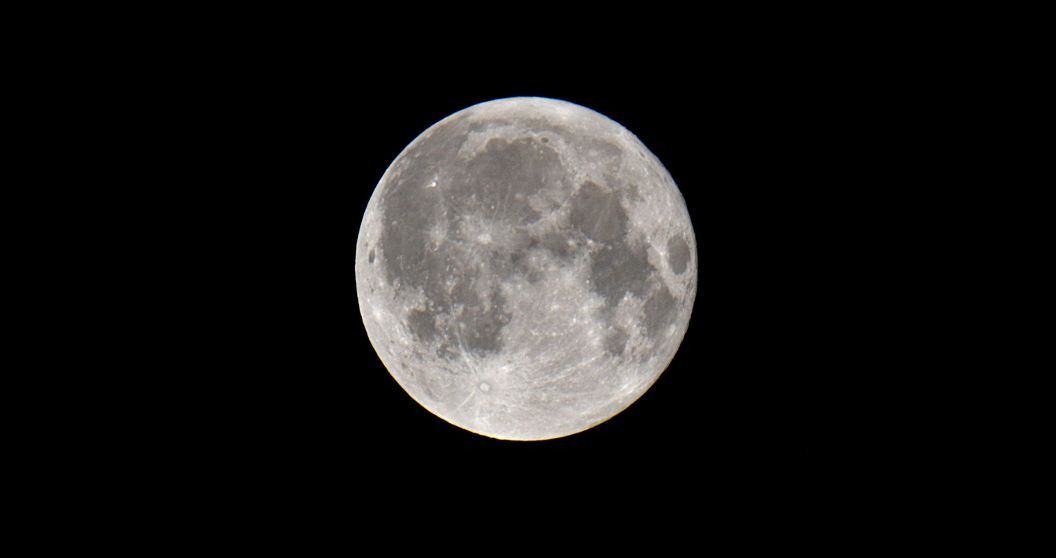
SpaceX conducted a record 167 rocket launches in 2025. According to NASA, one of those rockets is traveling 5000 miles per hour through space and is expected to cause a massive crater when it crashes into the moon early Wednesday morning.
Videos by Wide Open Country
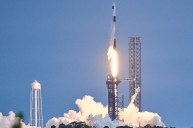
The 230-ft. Falcon 9 lifted off from launch complex 39A at the Kennedy Space Center on Jan. 15, 2025, packed with a pair of spacecraft bound for the moon. While the rocket's first stage — the booster used for liftoff — returned to Earth, its second, or upper, stage served as the workhorse that propelled the robotic landers on their path to the moon and, after its mission was complete, remained in space.
Weighing roughly 9,000 pounds and measuring around 45 feet in length, the rocket piece will strike the Moon at approximately 5,400 miles per hour with the equivalent strength of three tons of TNT.
As reported by the BBC, experts believe that the SpaceX Falcon 9 rocket struck the Moon at around 3:35 AM EST.
NASA Using Moon Crash as Controlled Study
Although a rocket fragment smashing into Earth's satellite planet sounds like a massive issue, NASA is using the crash as a controlled experiment to further its understanding of lunar exploration.
Since researchers know the rocket's size, speed and weight, scientists can study how impacts dig out craters, throw debris across the surface, and send tremors through the Moon's interior.
Understanding how much rock and dust an impact throws up will help engineers design safer landers and future Moon bases.
Scientists estimated the collision would pose no danger to Earth but could create a crater 65 to 90 feet in diameter on the moon's surface, according to a preprint study by a group of scientists, including researchers at NASA.
Experts said that the impact will not be visible with a naked eye.
"There is no danger to Earth," according to a NASA statement shared with CNN. "NASA will continue to track the booster for training purposes. As well as later observe the impact site for scientific purposes."
With a growing number of rocket launches towards the moon, space debris will likely continue to stockpile nearby. Understanding how impacts affect moon tremors and stability will assist NASA with future lunar exploration.
The space agency has invested roughly $20 billion to form a permanent moon base by 2030.