
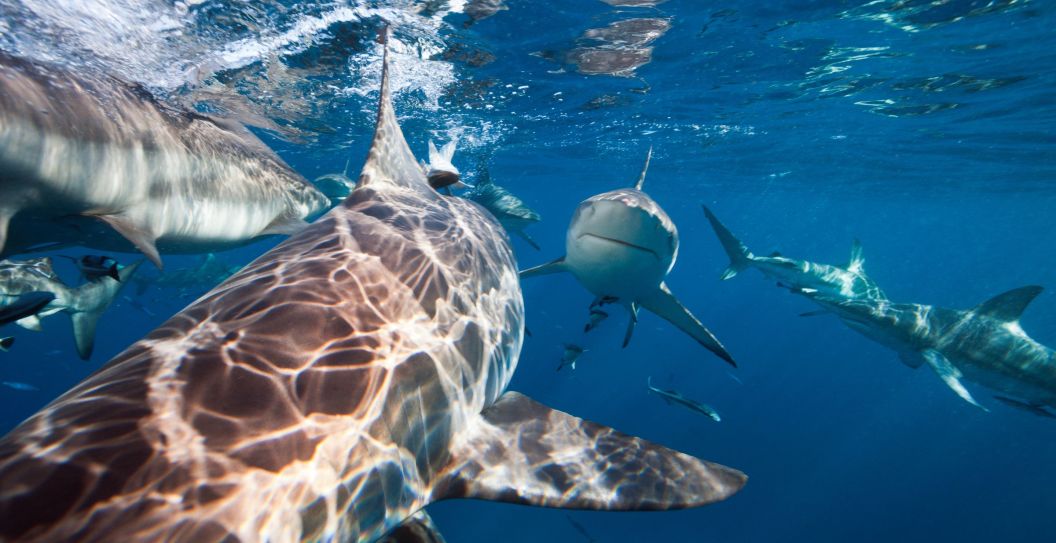
Everyone has their vices - and that apparently applies to sharks too. Although, they're not exactly choosing to get high.
As reported by CBS News, scientists have found that sharks in the Bahamas have tested positive for a myriad of drugs. These include painkillers, caffiene, and even cocaine.
An international research team consisting of marine biologists from institutions across the world conducted the study. They analyzed blood samples from 85 sharks across 5 different species. The sharks were first captured four miles off the coast of a remote Bahaman island, and were released after having a blood sample taken.
Their blood was tested for levels of 24 legal and illegal drugs. 28 of the sharks ended out having detectable levels of caffeine and anti-inflammatory painkillers. And one even had cocaine present.
The researchers noted that various drugs are "increasingly recognized as contaminants of emerging concern" in the oceans. They also said "[areas] undergoing rapid urbanization and tourism-driven development" are those most likely to be at risk.
But, while they said the cocaine was the flashy part, the other drugs were more of a concern to them. Lead autor Natascha Wosnick of Brazil's Federal University of Parana explained this.
"While the detection of cocaine - an illicit substance - tends to draw immediate attention, the widespread presence of caffeine and pharmaceuticals in the blood of many analyzed sharks is equally alarming."
Videos by Wide Open Country
How Do Drugs Affect Sharks?
It turns out these drugs have really serious affects for the sharks. The data showed that the affected sharks were more stressed, and had worse metabolisms. While the researchers weren't quite sure just how bad this was for the sharks, they did say it would probably cause behavioral changes.
"Our primary concern is not an increase in aggression... but rather the potential [health] implications... Chronic exposure to these anthropogenic compounds, many of which have no natural analogue in marine systems, may lead to negative effects," Wosnick said.
The researchers added that the results showed "the urgent need to address marine pollution." Serious stuff!
We hope that this doesn't become a more serious thing in the future. The oceans are important, after all!