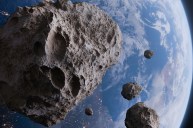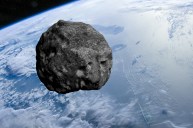
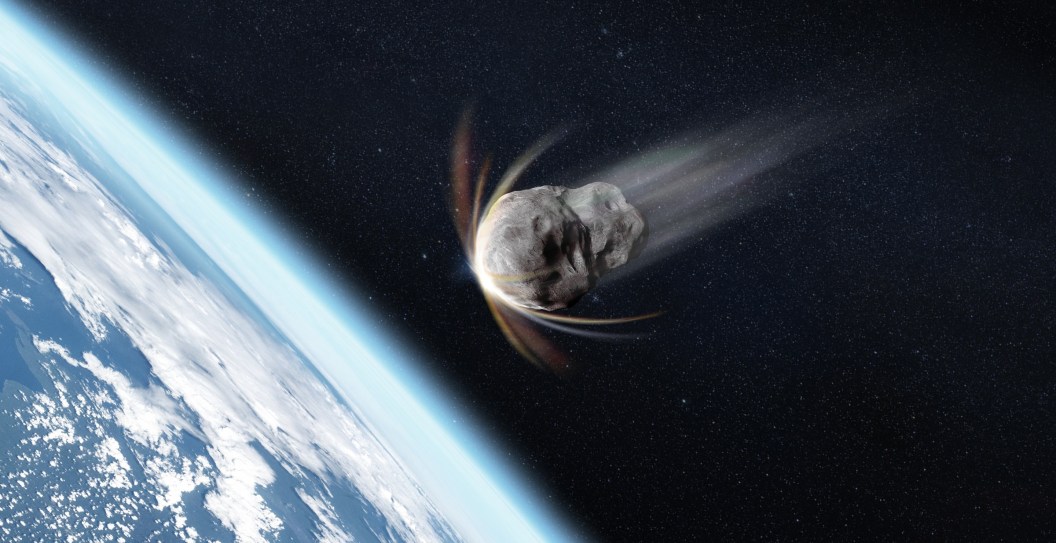
NASA has spoken up about the asteroid that could potentially hit Earth's surface in 2032. It's keeping its eyes on the asteroid named 2024 YR4 which has a 1.5% chance of hitting Earth in seven years. According to Live Science, this giant rock is big enough to wipe out a city.
Videos by Wide Open Country
NASA Already Planning For Possible 2032 Asteroid Impact
"No one is panicking," said a Kennedy Space Center project manager per the New York Post. "But it's definitely what we're talking about in the hallways of NASA." She mentioned they know they have time to act but "now's the time to start planning. You can't half-ass this at the last minute."
The initial likelihood of the asteroid hitting our planet was 1.2%, but on February 7 NASA increased it to 2.3%. Since then, it rose the odds of impact to 2.6%, and two days ago it was 3.1%. The good news is that just today we learned that NASA pushed the numbers back down to 1.5%, 1 in 67 odds.
If you really think about it, a 98.5% chance of it not crashing into us is huge. Despite the low chances, NASA is currently hard at work to research 2024 YR4's trajectory. Interestingly, there's a 0.3% probability of the asteroid hitting our moon instead of us.
Based on current data, scientists believe YR4 to be around 180 feet wide. You could compare its width to how tall the leaning tower of Pisa is. Experts have also concluded that it could crush a major city and release around eight megatons of energy on impact.
If you put it over Paris or London or New York, you basically wipe out the whole city and some of the environs," said Bruce Betts, chief scientist of the Planetary Society to AFP. It would certainly be catastrophic, but luckily NASA has means of destroying oncoming asteroids.
NASA's project manager said that "destroying it would be easy." They wouldn't need that many explosives either. "The trick is getting to it, and delivering the explosives precisely at the right time, at the right angle. That's the hard part."
Even if they failed to destroy it, NASA claims that it would likely hit water. Its "risk corridor" would extend "across the eastern Pacific Ocean, northern South America, the Atlantic Ocean, Africa, the Arabian Sea, and South Asia."