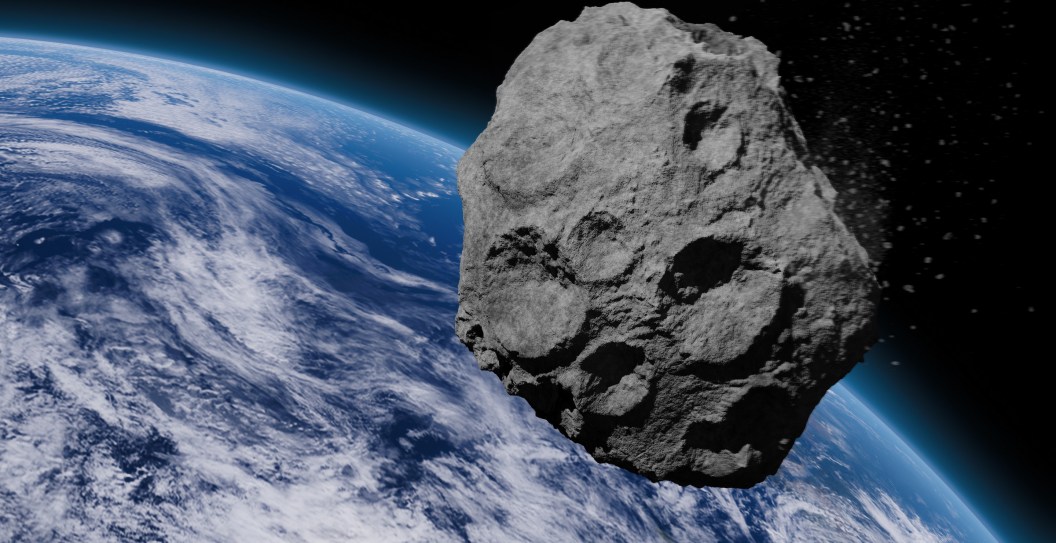
If you were afraid that the 2024 YR4 asteroid would hit our planet by 2032, you can finally take a breather. NASA revealed that after observing the "city-killer" asteroid for two months, its probability of hitting Earth has diminished immensely.
Videos by Wide Open Country
NASA Has Good News For Trajectory Change Of 2032 Asteroid
The space experts announced on Tuesday that YR4 won't be a threat to Earth anymore as it has an impact chance of 0.0017%. This is a huge drop from its previous probability from a week ago, which was 1.5%. It's now almost a certainty that the space rock that's 180 feet wide will avoid Earth in seven years.
During these past few weeks of research, NASA had heightened the chances at one point to 3.1%. This was a 1/32 chance of YR4 hitting Earth and possibly dealing catastrophic damage. If the asteroid did hit a highly populated area, it would it out, dealing 8 megatons of impact damage.
Finally, NASA is betting on the fact that the asteroid will miss Earth entirely. Paul Chodas, the head of NASA's Center for Near Earth Objects Studies, spoke to AP News about the new trajectory change. "That's the outcome we expected all along, although we couldn't be 100% sure that it would happen."
Although, that doesn't mean it won't hit something. NASA is still set on the 1.7% chance that YR4 could strike our moon on December 22, 2032. Luckily, Chodas believes that those odds will also drop.
Despite this good news, NASA is still set on keeping an eye on the asteroid. Unfortunately, as it's currently heading away from our planet, it will soon leave our view within the next month or so. That means we won't be able to track it again until it shows back up again in four years.
In the very slim chances that YR4 does end up coming our way, there are ways for NASA to get rid of the problem. A Kennedy Space Center project manager told the New York Post that "destroying it would be easy." It wouldn't even require many explosives. "The trick is getting to it, and delivering the explosives precisely at the right time, at the right angle. That's the hard part."