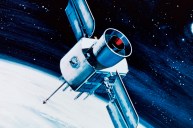
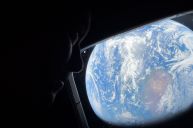
After over a two-decade-long space odyssey, a NASA telescope is set to come crashing back down to Earth.
Videos by Wide Open Country
Indeed, NASA predicts the Swift Observatory will plummet into Earth's atmosphere today (Nov. 4), according to CBS News. The space agency attempted to rescue the 3,200-pound telescope, which launched in 2004 over the summer, to no avail. It's been inching closer to Earth ever since.
However, NASA is assuring those of us looking to the heavens like in a Michael Bay disaster film that most of the space telescope will burn up in Earth's atmosphere. The mission's chief scientist, NASA's Brad Cenko, admits that some parts of the Swift Observatory could reach Earth, such as mirror parts and bits of the telescope made of dense materials like tungsten.
"As of Monday, the U.S. Space Force predicted that the roughly 3,200-pound spacecraft will re-enter the atmosphere at approximately 3:30 a.m. EST, Nov. 4, with an uncertainty of 11 hours," NASA explained on Nov. 2.
Debris from NASA's Space Telescope Is Expected to Plummet into the Ocean... Mostly
For now, it sounds like the United States is safe, with most of the space telescope expected to hit the ocean. However, Africa, Australia, India, Southeast Asia, and Central and South America could end up with some Swift Observatory debris.
That said, NASA is assuring folks that the chances of injury from the crashing space telescope are minuscule: about 1 in 2,100.
"NASA and Space Force will continue to monitor the re-entry and update predictions," the organization added.
Meanwhile, the mission's teams are mourning the loss of the telescope, which explored space phenomena like gamma-ray bursts and supernovas for 22 years. Astronomer John Nousek, of Pennsylvania State University, led the crew's control team. While he admitted his team expected this day, it was still powerful.
"We've known this day would come since before Swift was launched," Nousek said, per CBS News. "At least in low-Earth orbit, what goes up must come down. And that end is catastrophic."
It seems solar activity dragged the telescope down faster than expected. Katalyst Space's three-armed robot named Link mounted a rescue effort, which failed back in July. The robot itself plunged into the ocean last September, never coming close enough to the Swift Observatory to change the telescope's fate.
However, NASA still considers the data collected by the space telescope a success. Nousek believes the soon-to-be-destroyed Swift Observatory will shape future missions.
"Our fervent hope is that the lessons learned by the successes of Swift can be applied to new generations of space missions to accelerate our discoveries about the universe," Nousek said.