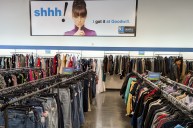

When buying new clothes, you always wash them first, right? Well, if you don't, you might be victim to what one thrift shopper in particular has suffered from.
Videos by Wide Open Country
It's common knowledge, and a highly studied topic, that you should always wash new clothes before wearing them. Simply because you can't guarantee that they're not harboring any undesirable chemicals or organic matter.
And it's also just a cleanly thing to do.
If you're not convinced, however, then let this be a cautionary tale. Per The New York Post, according to Jam Press, a man contracted a shocking skin disease after wearing contaminated clothing. A shopper, who preferred to remain anonymous, now has numerous raised bumps on his face.
He explained in a viral video that he has contracted molluscum contagiosum, most likely to wearing thrifted clothes he never washed. It's likely that a previous owner of one of his second-hand garments had the condition.
According to the Mayo Clinic, the virus that causes molluscum contagiosum spreads through skin-to-skin contact and through infected objects. So his blaming of unsanitized thrifted clothes is a fair assessment.
You Never Know What Could Be Hiding In Your Thrifted Clothes...
The clinic further explains that the bumps that form on the skin are painless, and should disappear within 6 months to 2 years.
So the anonymous thrifter may be dealing with these bumps for a while.
His TikTok is full of videos of him living life and dealing with his skin condition. He appears unperturbed by them, likely due to their temporary nature. His comments are also mostly full of support from his viewers.
Molluscum contagiosum isn't the only thing that can be passed on through contaminated clothing, however. Ringworm can persist through clothes and fibers, according to the CDC. So to be on the safe side, make sure to wash everything you get from thrift stores.
In fact, make sure to send everything new through the washing machine. You don't know who else was touching or trying on the new clothing you bought, or what they were carrying with them.