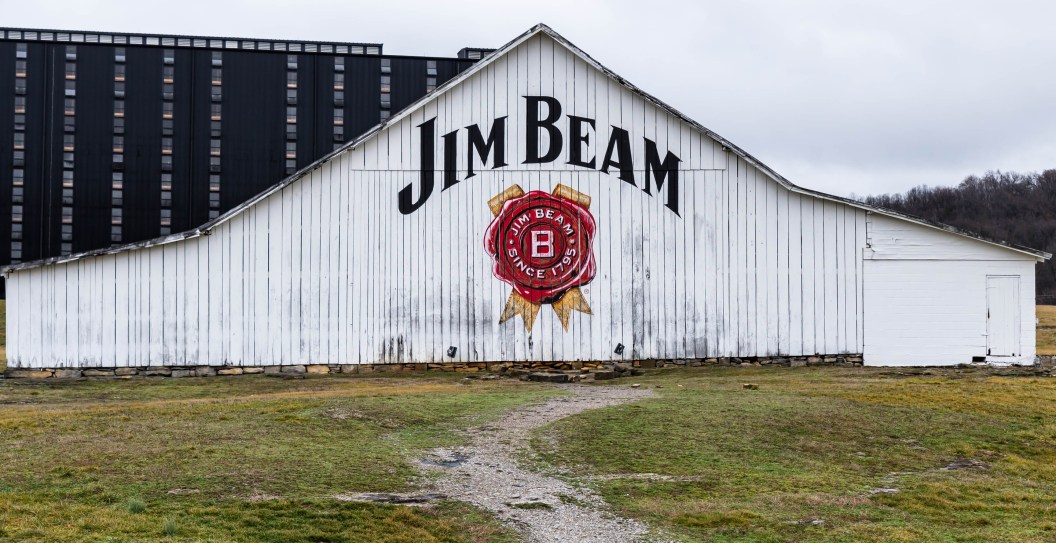
Whiskey fans, it might be time to pour one out for Jim Beam. Its distillery in Clermont, Kentucky, is temporarily halting production because of declining sales and record inventories.
Videos by Wide Open Country
Jim Beam is Uncertain When Production Will Resume
Last year, Jim Beam announced that its main distillery in Clermont, Kentucky, would stop production for about a year.
The company, owned by a U.S. subsidiary of Japan's Suntory Holdings, told reporters the pause was due to its "assessment of production levels to best meet consumer demand."
But as the New York Post reports, the brand is extending that pause indefinitely. Suntory said it manages production at the Kentucky facility based on demand, inventory, and long-term needs. It said it plans to reassess production in the future.
Production of Jim Beam has moved to its Booker Noe Distillery in nearby Boston, Kentucky. With an annual output of 45 million gallons of original proof, it is now the brand's largest distillery.
One of the company's other distilleries, the Fred B. Noe Craft Distillery, which is also located in Clermont, will remain open. It continues to produce whiskey labels, including Knob Creek, Little Book, and Booker's, Inc.
Why Is Inventory So High Right Now?
Younger generations aren't consuming alcohol as readily as others have in the past. Add to this, trade challenges are making it hard for distilleries to get bottles off the shelves.
Inventory of whiskey in the United States is three times higher than estimated demand, according to an October report from the global beverage alcohol data and insight firm IWSR. It also shared that total beverage alcohol sales declined for the third consecutive year in 2025.
"The unifying theme across Scotch, US, Japanese and Irish whiskey is polarization by price tier: we are seeing growth narrowing to specific bands within each whisky sub-category, rather than spreading across the price ladder," said IWSR managing director and president Marten Lodewijks.
He also added, "And in most cases, that growth is concentrating at the premium end, while the mainstream and value tiers absorb the pain."