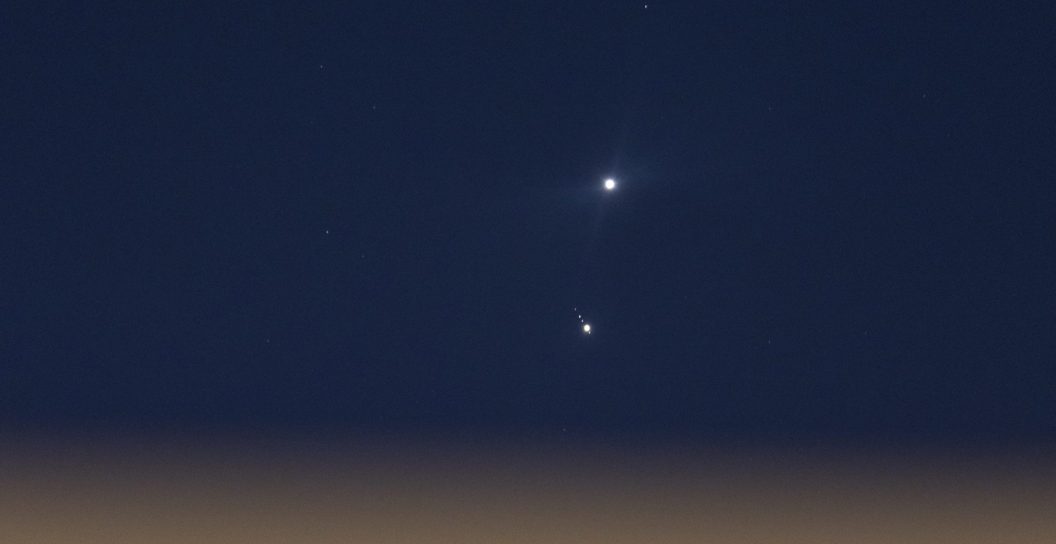
Tonight is a great night to look up into the heavens. There is an opportunity to see Venus, Jupiter, and Mercury together as the planets gather low on the western horizon.
Videos by Wide Open Country
How Can I See the Planets?
Venus and Jupiter are the two brightest planets visible from Earth, so no special equipment is needed to see them.
Venus and Jupiter will look especially close together tonight. According to NASA, although Venus is closer to Earth, Jupiter is over 100 million miles away. But from Earth, the planets will appear aligned.
When Can I See the Planets?
The best time to see Venus and Jupiter will be about 45 minutes after sunset. Depending on your location, the weather, and your view of the horizon, the celestial display will continue into the early twilight hours. The planets should remain close through the week.
According to Space.com, Mercury will sit lower in the sky, closer to the sunset's glow. This will make the planet harder to spot.
There will be even more to see in the night sky next week. On June 16 and 17, a thin crescent moon will be added to the already picturesque display.
Where Should I Look?
Look west to see these three planets. While Venus and Jupiter will be easiest to spot because of their brightness, Mercury will be more of a challenge.
For the best chance to see all three planets at once, find a clear, unobstructed view away from buildings, trees, and city haze. While light pollution won't make it too difficult to spot Venus and Jupiter, it will make Mercury a little more difficult to see.
Venus will be the brightest point in the sky. Jupiter will be nearby, but dimmer than Venus.
Once you find this pair of planets, scan lower to find Mercury. It will be dimmer than Venus and Jupiter, so you may need binoculars. You should be able to leave your telescope inside.