
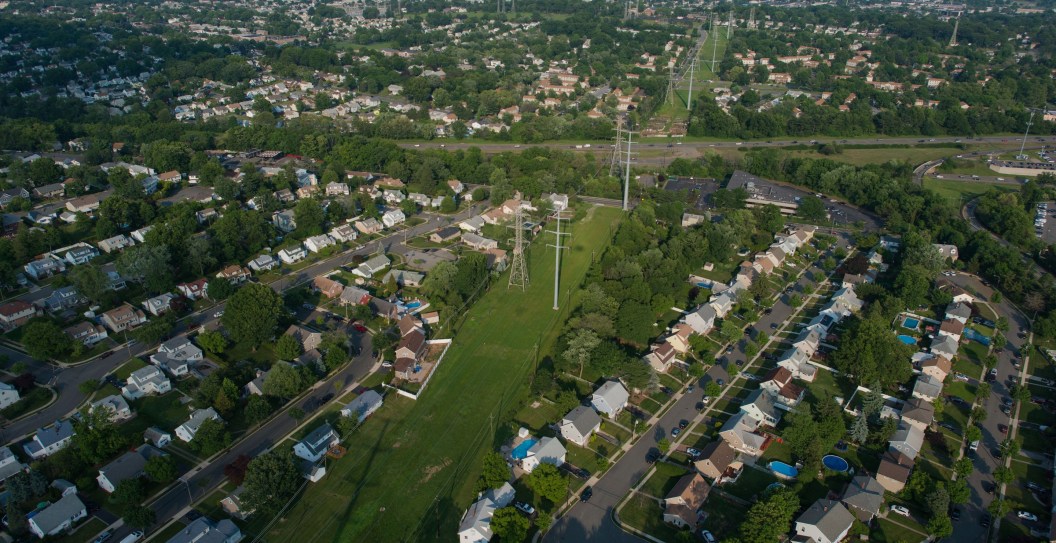
Cancer is a terrible, terrible thing. And some of the environmental reasons behind cancer risks are just as terrible. One small New Jersey town has faced a slew of cancer diagnoses. As reported by the Daily Mail, this comes after a mother and son made their own "cancer map".
Ginger Morris first noticed Keyport, New Jersey's statistical anomaly: that a lot more people than usual were being diagnosed with cancer. This even included her husband, Richard, who had started chemotherapy for his prostate cancer.
Every call she made to her son, Rusty Morris, who lived in Florida, seemed to include some detail about a family friend or neighbor tragically fighting the battle. So Rusty began to investigate.
It started pretty simply. A Google satellite map of Keyport, and a drawing tool. He would draw red X's on the households where someone was diagnosed with cancer. But he wanted to be accurate.
So he started calling old friends from the area. According to him, "it just kept snowballing". Keyport's "cancer map" now has 41 red X's on it. And the shocking part? Most of them are concentrated around two places. One is First Street, and the other is the Aeromarine dump site.
Videos by Wide Open Country
The Chilling "Cancer Map" Discovery Has Prompted Experts to Weigh In
And now, experts are weighing in on the situation. Dr. Alexis Mraz of the College of New Jersey's Department of Public Health was initially shocked at the map. "It looks like you have a crazy high percentage [of cancer patients]. When you're looking at a map like that, that looks insane!"
But she also expressed a more grave worry. "The other side of that coin is the reality [Rusty] probably hasn't gotten in that neighborhood, so there are likely more cases."
While it can't expressly be proven that the Aeromarine dump site is the reason for the sheer amount of diagnoses, the usage of the site might give some insight into the chilling discovery Rusty and his mom made.
The Aeromarine site used to be a small US Army and Navy aircraft firm. When it closed, it was converted into a landfill. A 2010 study found heavy metals in the landfill that could be harmful, as well as chemicals and carcinogens that leaked into the groundwater.