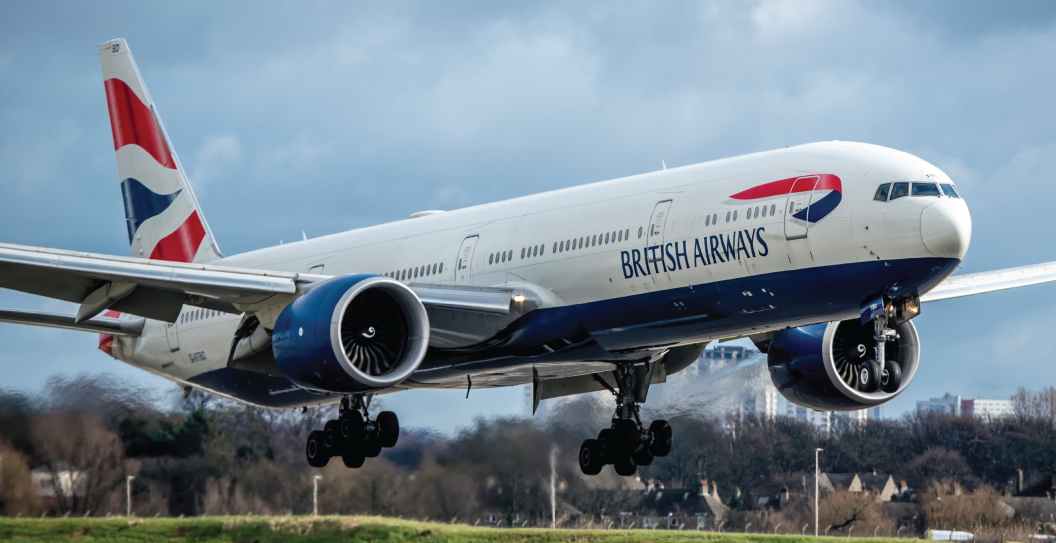
A British Airways flight declared an emergency while flying over the Atlantic Ocean after experiencing a technical issue.
Videos by Wide Open Country
Flight BA239, a Boeing 787 Dreamliner, was traveling from London Heathrow to Boston. The aircraft departed at 7:30 p.m. on November 24 but encountered the issue while flying between Greenland and Iceland.
The passenger plane was flying at 33,000 feet when pilots issued a squawk code of 7700, signaling a general emergency.
British Airways Flight Declares Emergency Over Atlantic
According to Flightradar24, the aircraft experienced engine oil loss, with the flight tracking service analyzing communications between the cockpit and ground stations.
British outlet Metro reported that a crew member identified "a minor technical issue and followed agreed protocols".
A British Airways spokesperson later said that "the aircraft arrived safely in Boston and customers disembarked as normal."
"Safety is always our highest priority," the statement added.
After consulting with British Airways' ground operations team, the pilots decided to continue their journey to Boston.
The aircraft landed shortly before 11 p.m. local time, approximately two hours behind its scheduled arrival time.
British Airways apologized to passengers for the delay.
European Flights Recently Experienced GPS Interference
The incident comes after GPS interference affected Ryanair, easyJet and British Airways flights over the North Sea earlier this month.
The interference lasted approximately 20 minutes and affected flights in England and the Netherlands, with a Russian warship emerging as the suspected source.
The warship was reportedly escorting three cargo ships approximately 190 miles off the English coast. Its positioning made it the suspected source of the disruption.
Authorities also suspect Russia was behind a GPS jamming incident in May involving a Royal Air Force (RAF) jet carrying Chancellor of the Exchequer John Healey.
Healey, who served as Secretary of State for Defence from 2024 to 2026, was reportedly visiting British soldiers in Estonia when the suspected electronic attack occurred.
Between August 2023 and March 2024, an estimated 46,000 flights operating in areas including the Baltic, Black Sea and eastern Mediterranean experienced interference issues.
The disruption extends beyond GPS systems, with positioning, navigation and timing (PNT) services also becoming targets of electronic interference.