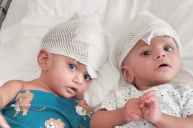
Conjoined twins are subjected to leading pretty difficult lives. There's a lot of complications that comes with having another person fused directly to you. It's something that often shortens their lifespan by quite a lot.
But the medical innovations that have been made in the 21st century are truly staggering. And they're getting more and more efficient every day.
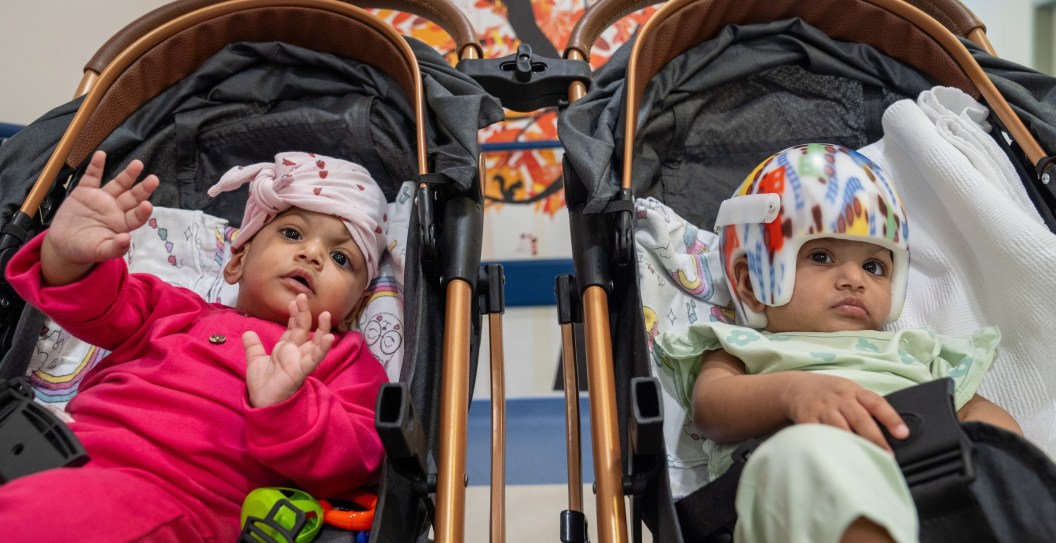
An international team of surgeons has managed to do what was previously thought impossible. Nigerian twins Mercy and Goodness are now able to live seperately, as reported by the Daily Mail.
The surgeon behind it was Professor Noor ul Owase Jeelani. He's one of the leading surgeons in this field - with experience in doing this in the past.
Jeelani is also the founder of Gemini Untwined. They describe themselves on their website as "providing hope and treatment for children and twins with complex craniofacial issues globally through pioneering research and treatment."
Mercy and Goodness alongside their parents travelled to Abu Dhabi for the surgery to take place.
Jeelani said about the case that "the separation of Goodness and Mercy is a landmark case planned and executed with a level of precision not encountered before."
Videos by Wide Open Country
How Did the Conjoined Twins' Surgery Work?
Well, it's not as simple as having a hip replacement, that's for sure.
It wasn't just one singular surgery - rather, it took four months and four days. There were four separate operations which took over 40 hours in theatre to achieve.
A lot of the innovations used came from advances in technology. For example, virtual reality and augmented reality were used to map out and plan the surgery before it happened.
Simulations were also used to ensure that what they were doing was right before they did it. This case was particularly complex because the children themselves shared part of the brain - one wrong move and they wouldn't make it through.
This landmark procedure gives hope to a number of other craniopagus twins. According to the Great Ormond Street Hospital, where Jeelani works, 40% of these twins are stillborn or otherwise die in labour. A further third pass away within 24 hours of their birth.
This is such a heartwarming story - we hope Goodness and Mercy live happy lives!