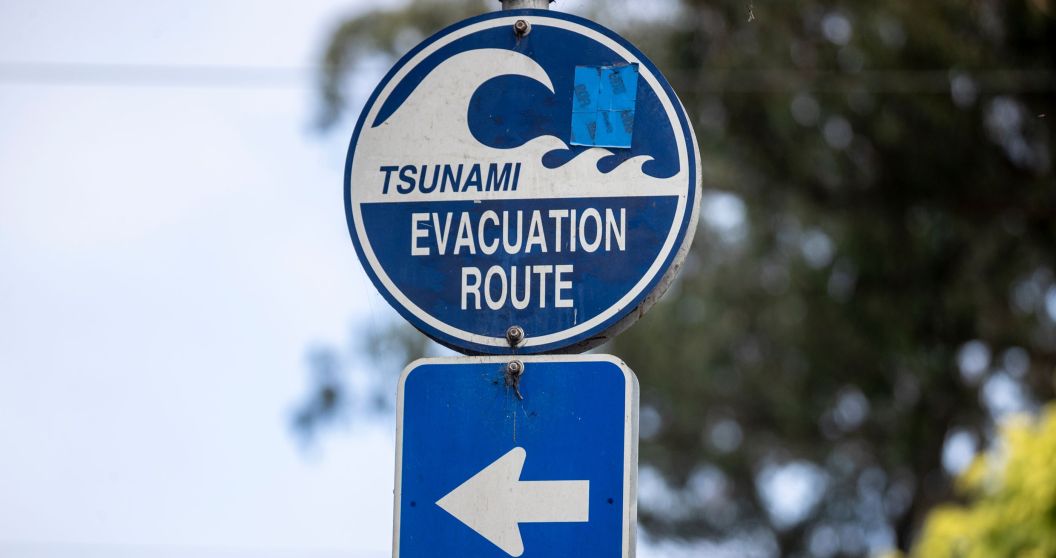
Scientists predict that a storm of biblical proportions, dubbed a "megatsunami," could wipe out the entire US East Coast within hours.
Videos by Wide Open Country
Oddly enough, a volcano could spark the massive storm, but not by erupting.
Volcanologist Professor Bill McGuire has been monitoring Cumbre Vieja, a 6,400-foot volcano in Spain known for its unpredictable nature and heavy volcanic ash.
In an article he published in BBC Science Focus, McGuire explained that a chunk of Cumbre Vieja, an enormous wall of rock called a "flank," could collapse into the Atlantic Ocean. Such a plunge could trigger a mighty tsunami.
"Based on extensive studies, I expect this part of the flank will eventually crash into the North Atlantic. Launching a megatsunami in the process," he wrote.
"There has been huge debate and discussion, sometimes quite heated, about the level of expected destruction. In particular, whether devastating waves will reach the coast of North America."
Megatsunami Could Strike Eastern Seaboard Within Hours of Volcano Collapse
If the flank plunges into the ocean, experts believe it could send 65-foot waves toward the US East Coast.
McGuire conducted computer simulations of the potential catastrophe, which showed enormous waves reaching the Eastern Seaboard within nine hours of the volcano collapsing. This outcome is described as the "worst-case scenario."
McGuire highlighted that tsunamis formed by volcanic activity can be as deadly as those born of underwater earthquakes.
Coastal or island volcanoes have triggered at least nine lethal tsunamis. The aforementioned tsunamis have claimed 55,000 or more lives in the last 300 years, according to BBC Science Focus.
"Large rock masses can fall into the sea from coastal or island volcanoes at any time, driving devastating waves onto nearby coastlines and sometimes to great distances," McGuire wrote.
"Volcanoes might seem like bastions of stability, but many are just tottering piles of rubble, rotted internally by seeping volcanic gases and looking for any excuse to collapse," he added.
McGuire says Cumbre Vieja in particular has been especially worrisome for him and his team.
"One model predicts, for a worst-case scenario, that collapse will generate an initial dome of water almost a kilometer high. This will subside to create waves hundreds of meters in height that overwhelm the coastlines of La Palma and neighbouring islands. Waves of around 20 meters would crash into Florida just nine hours later. Leaving little time for a mass evacuation."