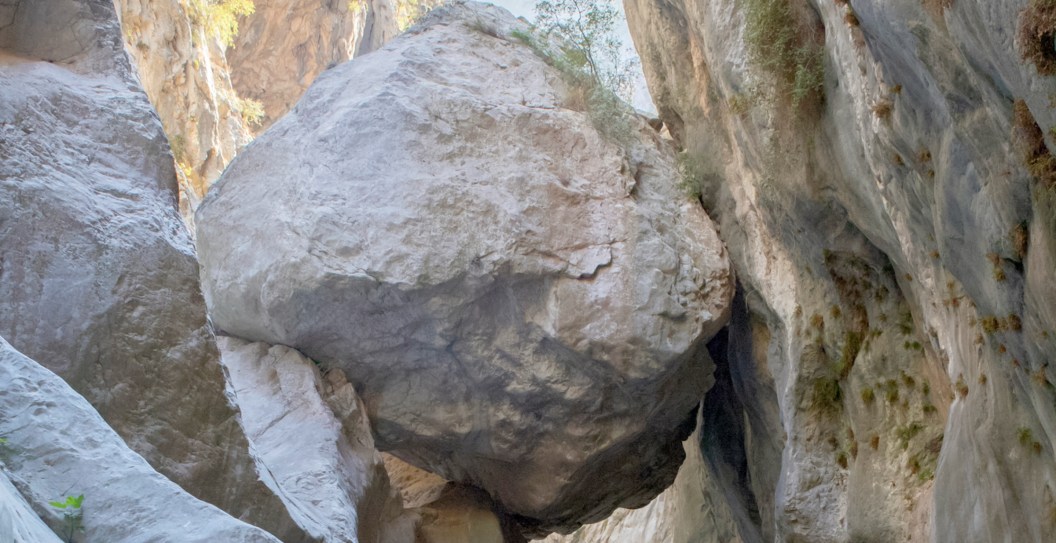
A giant "mysterious hanging boulder" at a New Hampshire tourist attraction came crashing down on the final day of the season.
Videos by Wide Open Country
The alleged 80-ton boulder tucked away at Polar Caves in New Hampshire's White Mountains came tumbling down on Oct. 18, according to the park, per The New York Post. The massive boulder landed on a walkway thousands of tourists use every year.
"We are incredibly grateful that no one was injured in this incident," Polar Caves Park explained in the press release, via The Post.
However, since the boulder crashed on the last day of the season, the park has plenty of time to figure out its next step.
Reportedly, the "mysterious hanging boulder" had been one of the park's biggest draws since it opened back in 1922. A sign alongside the boulder claimed that 75% of the gargantuan rock's weight dangled right over the heads of guests as they passed under. The Polar Caves, part of the White Mountains, in Rumney, formed thousands of years ago after a continental glacier moved southward, according to the park's website.
"We thank our guests and community for their continued support and look forward to welcoming everyone back for the 2027 season," Polar Caves added in its statement.
The park's website boasts that the attraction gives "generations of visitors a chance to slip between the rocks of time and explore the underbelly of the earth." With the loss of the 80-ton hanging boulder, the park will have to rely on attractions like its boulder maze and nature trails to get tourists back for the 2027 season...
Polar Caves's 80-Ton Boulder Falling Follows the Loss of Another Park's Beloved Natural Attraction
The sad news follows the loss of another beloved natural attraction, lost forever.
Hawaii Volcanoes National Park announced that the H?lei Sea Arch, thought to have been a major landmark for 500 years, fell into the sea late last month. "The iconic H?lei Sea Arch in Hawaii Volcanoes National Park has collapsed into the Pacific Ocean, marking the latest transformation of the park's remote and rugged coastline," the organization wrote at the time.
The park noted that the landmark has been standing as recently as Sept. 23.
However, by Sept. 27, the Pacific Ocean swallowed it whole.
The park was closed due to Tropical Storm Nolo during that time frame, meaning we'll never know just when it was lost forever.