Save your scatological jokes as you read this next story. We've got enough poop puns in it already.
Videos by Wide Open Country
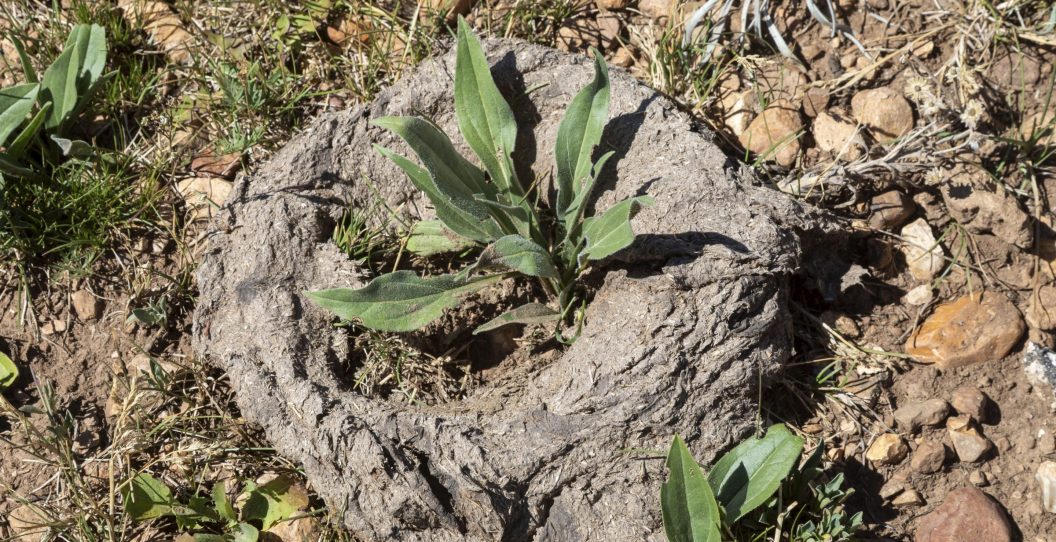
Scientists have found evidence that a massive release of fossilized animal feces may have helped trigger the explosion of complex life on our planet hundreds of millions of years ago.
Life Finds a Way... in Poop
As reported by Dexerto, an international team of scientists led by Dr. Russell Bicknell analyzed fossilized feces and coprolites from around the world.
The fossil evidence dates back roughly 538.8 million years. That's when most major animal groups began to appear on the planet. Before this point in time, marine animals had no anus at all. Ingested food entered, and waste exited through the same opening. Because of this, there is no confirmed fossilized waste before this evolutionary transition.
As animals developed a proper through-gut, a mouth at one end and an exit at the other, they could eat constantly. There was no need for them to stop and eject waste. This also allowed early arthropods to process a wider range of food.
Poop Pellets Gave Animals a Boost
Fecal pellets would sink into the deep ocean. They carried nutrients that included carbon, nitrogen, phosphorus, and iron. This created a nutrient cycle that helped animals grow. It also allowed ecosystems to develop faster.
"Next to rising oxygen levels and other contributing factors, the importance of feces in ancient ecosystems is often overlooked," said Bicknell. "We have considered these ancient diets, increasingly sophisticated digestive systems and trophic interactions as part of a much bigger picture to help explain how more organic matter and nutrients poured into the ancient oceans."
Before this discovery, the explosion of life on Earth was believed to be due to the rise of atmospheric oxygen. The formation of the ozone layer and erosion from the shifting continents also played a role.
Bicknell's team believes that poop needs to be part of the conversation surrounding the Earth's origin story.
He said, "It becomes clear in the fossil record that the evolution of feeding strategies aligns with the production and distribution of organic carbon and nutrients, to start creating conditions we see in modern oceans and later on land, where fertilizer today is used to produce our food."