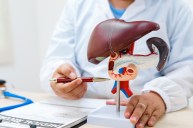

A 100-year-old WWII vet has become the world's oldest organ donor. This comes after his family chose to donate his liver.
Videos by Wide Open Country
Nebraska native Dale Steele passed away at 100 on February 11. That's when doctors approached his family about potentially donating his liver. The veteran's son, Roger Steele, was shocked that was even an option given his father's age.
However, Dr. Lee Morrow, chief medical officer at Live On Nebraska, explained that the liver regenerates throughout a person's life. "Your liver is about 3 years old, my liver is about 3 years old and that 100-year-old donor, his liver was about 3 years old," Morrow told KMVT.
The family chose to allow a piece of the vet to live on. Doctors transplanted the liver the next day.
Vet Donates His Liver
"This is a story about a life of service that didn't end at death," Kyle Herber, president and CEO of Live On Nebraska, said in a press statement. "Mr. Steele lived a full century giving to others, and through donation, that generosity continues in a way that will impact lives for years to come."
Born in 1925, the vet survived the Great Depression and World War II.
"Returning from the Army, Dale met and married Doris Brown, his wife of 72 years," the obituary stated. "They raised Hereford cattle, and Dale worked at the Farmers Co-op in Bassett, NE. He later managed the Farmers Co-op in Pierce, NE, and before he retired, he sold irrigation and grain handling equipment for Petersen and Son, Inc in Osmond, NE."
The WWII vet lived a long life.
"He had a strong body that was able to carry him through his 100th birthday. I think that came from hard work," Roger also told Nebraska Public Media. "People from his generation didn't have a notion of exercise. When they went to bed at night, they were tired from having worked hard all day. That was their exercise."
The family is happy to know that a piece of the vet continues ot live on and help someone else.
"The great joy I feel in knowing that somebody else was able to benefit from my father's life — even though they're gone, they were able to help somebody else have a lifesaving gift. That's what I'd like people to take from it," he told Nebraska Public Media.
"He would want the acknowledgement [of his act of kindness] to go to the life he saved," Scott told Live On Nebraska.